


Humphry John Moule Bowen was a British botanist and chemist born in Oxford, England, son of the physical chemist Edmund Bowen. He completed a DPhil in chemistry at Oxford University in 1953. His first post was with the Atomic Energy Research Establishment (AERE), working at the Wantage Research Laboratory, then in Berkshire. His early work led to an interest in radioisotopes and trace elements that lasted throughout his working life. While at AERE, he attended the British nuclear tests at Maralinga in Australia to study the environmental effects of radiation.
Realizing that the calibration of different instruments intended to measure trace elements was important, in 1960 Bowen produced a dried, crushed chomogenate of the plant kale that was stable and consistent enough to be distributed as a research calibration standard. It later become known as Bowen's Kale.
In 1964, he was appointed as a lecturer in the chemistry department at the University of Reading, Berkshire, England. In 1974, he was promoted to Reader in analytical chemistry. When the Torrey Canyon oil disaster occurred in 1967, he realized that it might be possible to use foam booms to block the oil from spreading in the English Channel. Although not entirely successful due to the rough seas, it has since been effectively deployed to protect ports and harbours against encroaching oil slicks. Bowen wrote a number of books in the field of chemistry, including Trace Elements in Biochemistry (1966 and 1976).
Beginning in 1951, Bowen was a member of the Botanical Society of the British Isles. He was the official recorder of plants for the counties of Berkshire and Dorset, producing Floras for both counties. He was also one of the leading contributors of botanical data for The Flora of Oxfordshire.
Source: Wikipedia


28 works Add another?
 Most Editions
Most Editions
First Published
Most Recent
Top Rated
Reading Log
Trending
Random
-

-
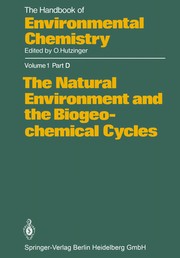
-
-
-
-
Preview Book
×Close -
-
-
-
-

Subjects
Trace elements, Botany, Environmental chemistry, Radioactivation analysis, Radioisotopes, Solids, Tracers (Chemistry), Activation Analysis, Analytical Chemistry Techniques, Biochemical Phenomena, Biochemie, Biochemistry, Biogeochemical cycles, Biological chemistry, Chemical elements, Chemistry, Chemistry, analytical, Chimie de l'environnement, Cycles biogéochimiques, Ecologische aspecten, Elementen (chemie), Environment, Inorganic Chemistry, Ions, MINERAL CYCLINGID Numbers
- OLID: OL1636071A
- VIAF: 61606227
Links outside Open Library
No links yet. Add one?
Alternative names
- Humphry John Moule Bowen
- Humphrey John Moule Bowen
- H. J. M Bowen
- H.J.M. Bowen